
A Pilgrimage to the Holy Mountain of Athos
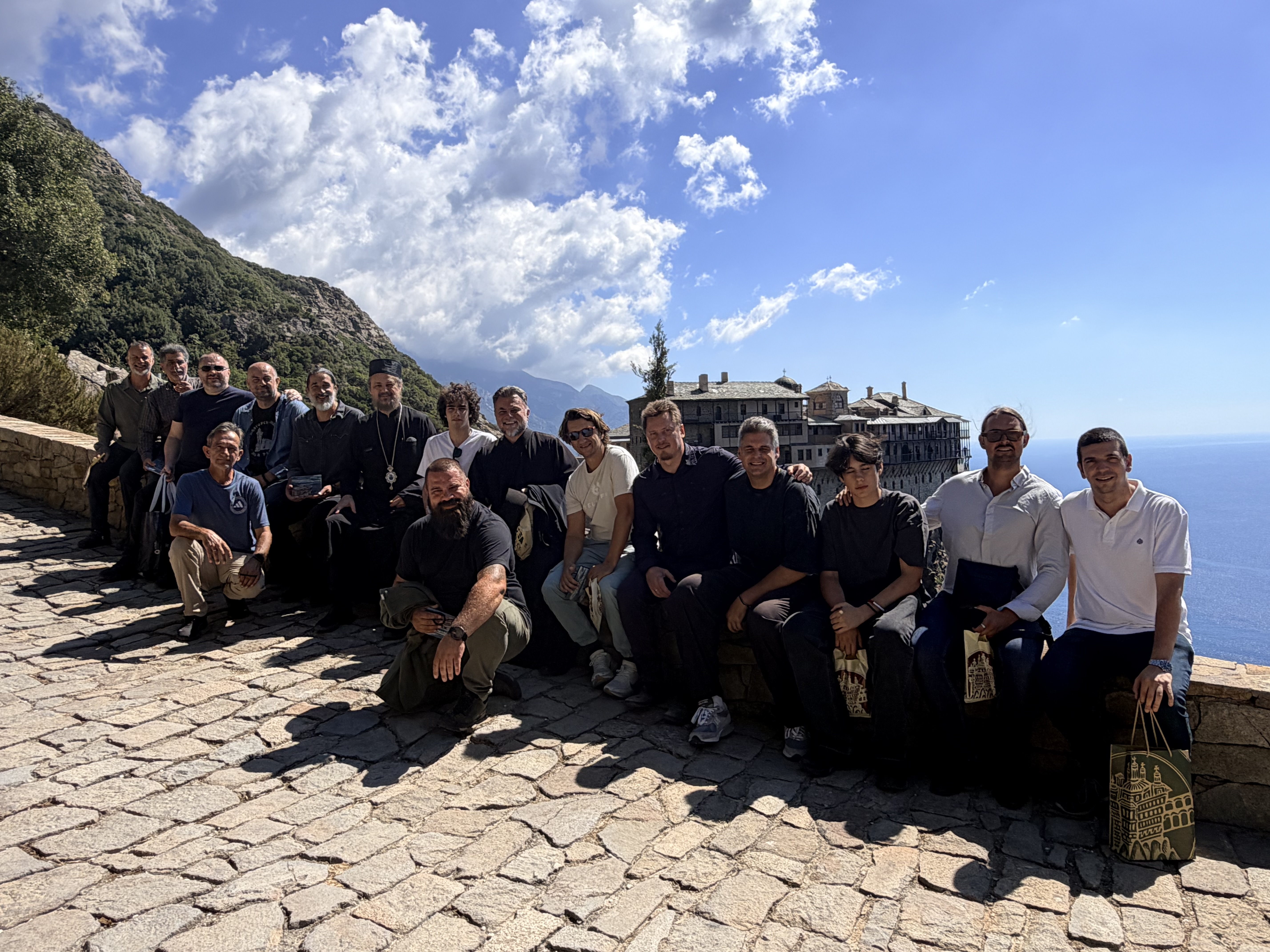
This September, a group of parishioners of Saint Sava Serbian Orthodox Church in San Gabriel was blessed to make a pilgrimage to the Holy Mountain of Athos, led by His Grace Bishop Maxim and our parish priest, the Very Reverend Protopresbyter-Stavrophor Father Predrag Bojovic. Mr. Marko Jakasovic also traveled with the group in the capacity of a scholarly consultant, impressing us all with his broad knowledge and his familiarity with historical and historiographical details relevant to our pilgrimage.
During our pilgrimage, we visited eleven monasteries—nine on the Holy Mountain and two in Greece—as well as the Serbian Military Cemetery of Zeitenlik in Thessaloniki and the Church of Saint Demetrios, where the holy and wonderworking relics of this great wonderworker and Great Martyr are venerated. At every monastery, we were received with great love, warmth, and the exceptional hospitality of the fathers of the Holy Mountain. Owing to the profound respect and love that His Grace Bishop Maxim enjoys throughout Mount Athos, our group was everywhere received with particular warmth and affection. We were blessed to meet some of the most distinguished elders and abbots of contemporary Orthodoxy and to receive from them spiritual counsel and instruction.
Among these encounters, our visit to Simonopetra Monastery and our meeting with Elder Ephraim, Abbot of Vatopedi Monastery, hold a special place. Elder Ephraim spoke to us with great love about his recent visit to Serbia, during which the great holy relic—the Holy Belt of the Most Holy Theotokos—was brought to our homeland. As a particular blessing, the Holy Belt, together with other holy relics, was brought forth before us so that we might venerate them and offer our prayers.
During our pilgrimage, we also had the honor of being officially received by the Protos of the Holy Mountain and the Holy Epistasia in Karyes, the administrative and spiritual center of Mount Athos.
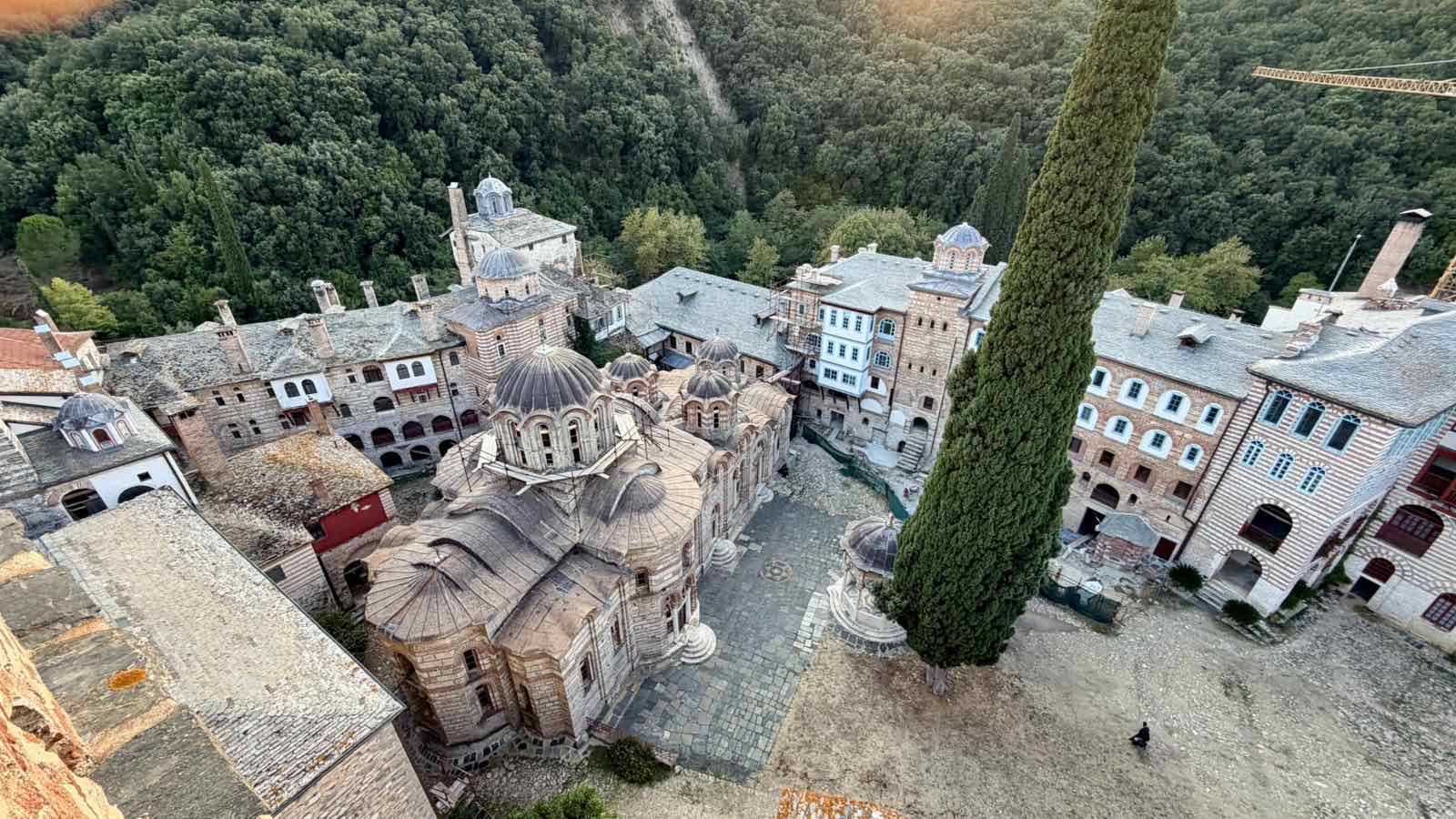
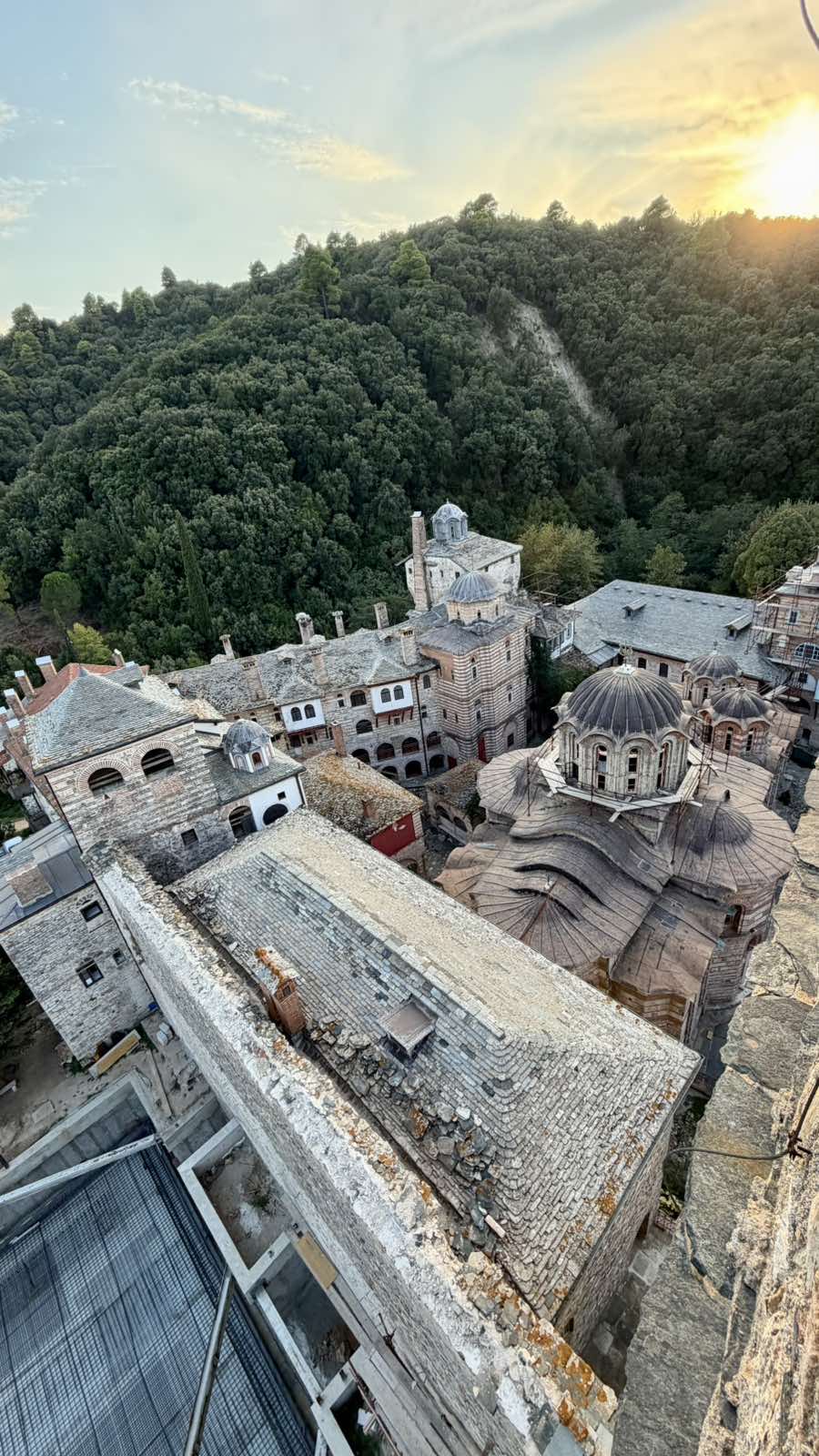
We visited the holy monasteries of Xeropotamou, Simonopetra, Koutloumousiou, Iviron, Vatopedi, Stavronikita, Pantokrator, and Xenophontos, before finally arriving at the crown of the Serbian Orthodox presence on the Holy Mountain—the Holy Monastery of Hilandar.
For us, as Orthodox Serbs, our arrival at Hilandar was a particularly profound and deeply moving moment. The Monastery of Hilandar, founded by Saint Sava and his father, Saint Simeon the Myrrh-streaming, remains a living witness to the spiritual heritage of our people and to the profound bond between Serbia and the Holy Mountain.
Throughout Mount Athos, we were deeply moved by the love and reverence with which the name of Saint Sava is spoken. At the same time, we were repeatedly reminded of the generosity and piety of numerous Serbian rulers and noblemen, among them Despot Jovan Uglješa and Prince Lazar, whose gifts and benefactions supported many of the monasteries of the Holy Mountain.
One particularly striking example is the Monastery of Vatopedi, where Saint Sava built six churches and chapels, as well as a great tower, thereby leaving an enduring Serbian imprint upon this ancient monastery.
A particular blessing of our pilgrimage was the invitation extended to His Grace Bishop Maxim and Father Predrag to celebrate the Divine Liturgy at Vatopedi, precisely in the church dedicated to the Holy Belt of the Most Holy Theotokos—a sacred place especially connected with the legacy of Saint Sava, since it was he who built it.
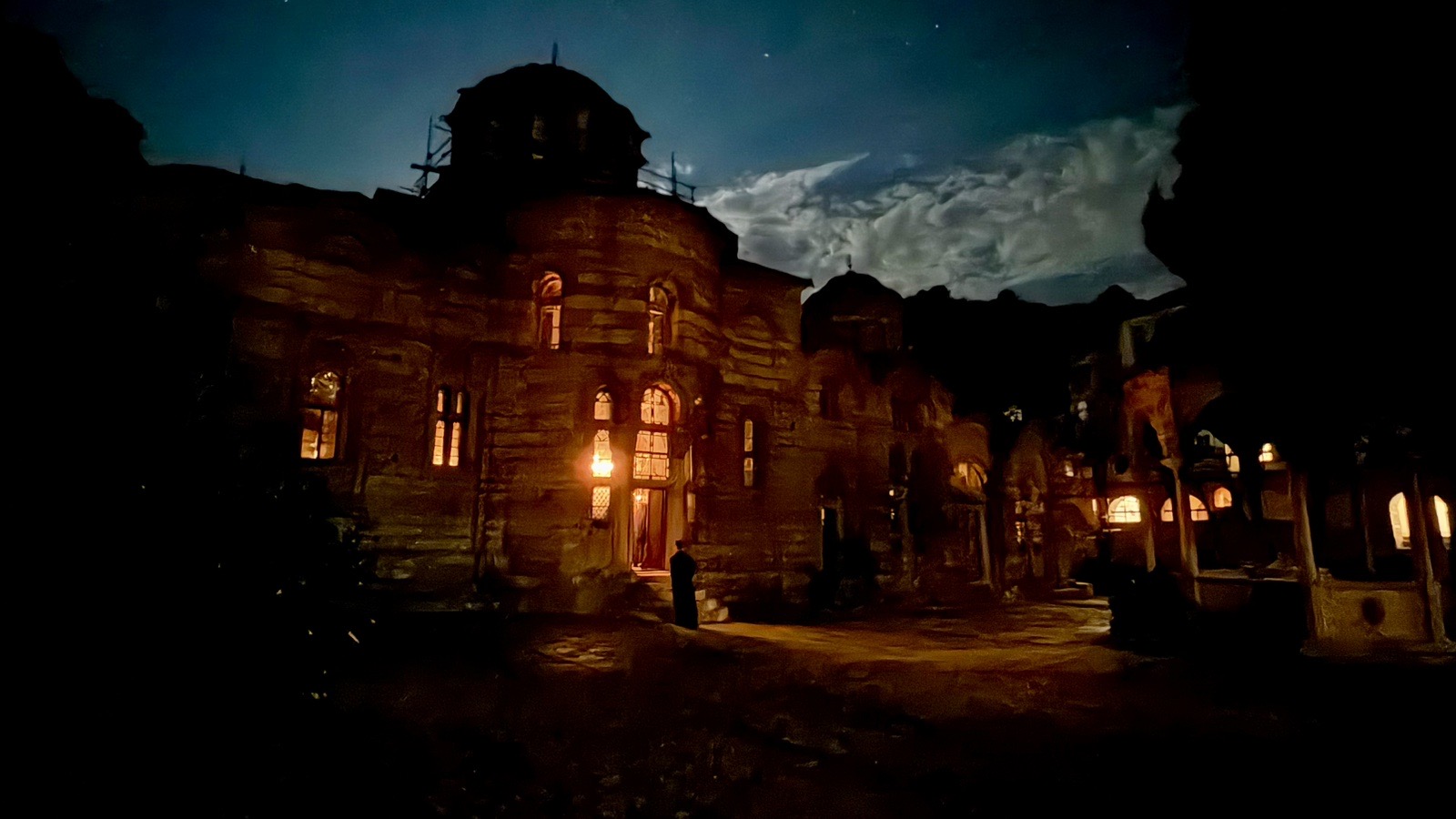
Our final days at Hilandar were filled with prayer and thanksgiving. We remained at the monastery for two days, participating with profound reverence in the divine services presided over by His Grace Bishop Maxim, and walking, both bodily and spiritually, in the footsteps of our holy father and enlightener, Saint Sava.
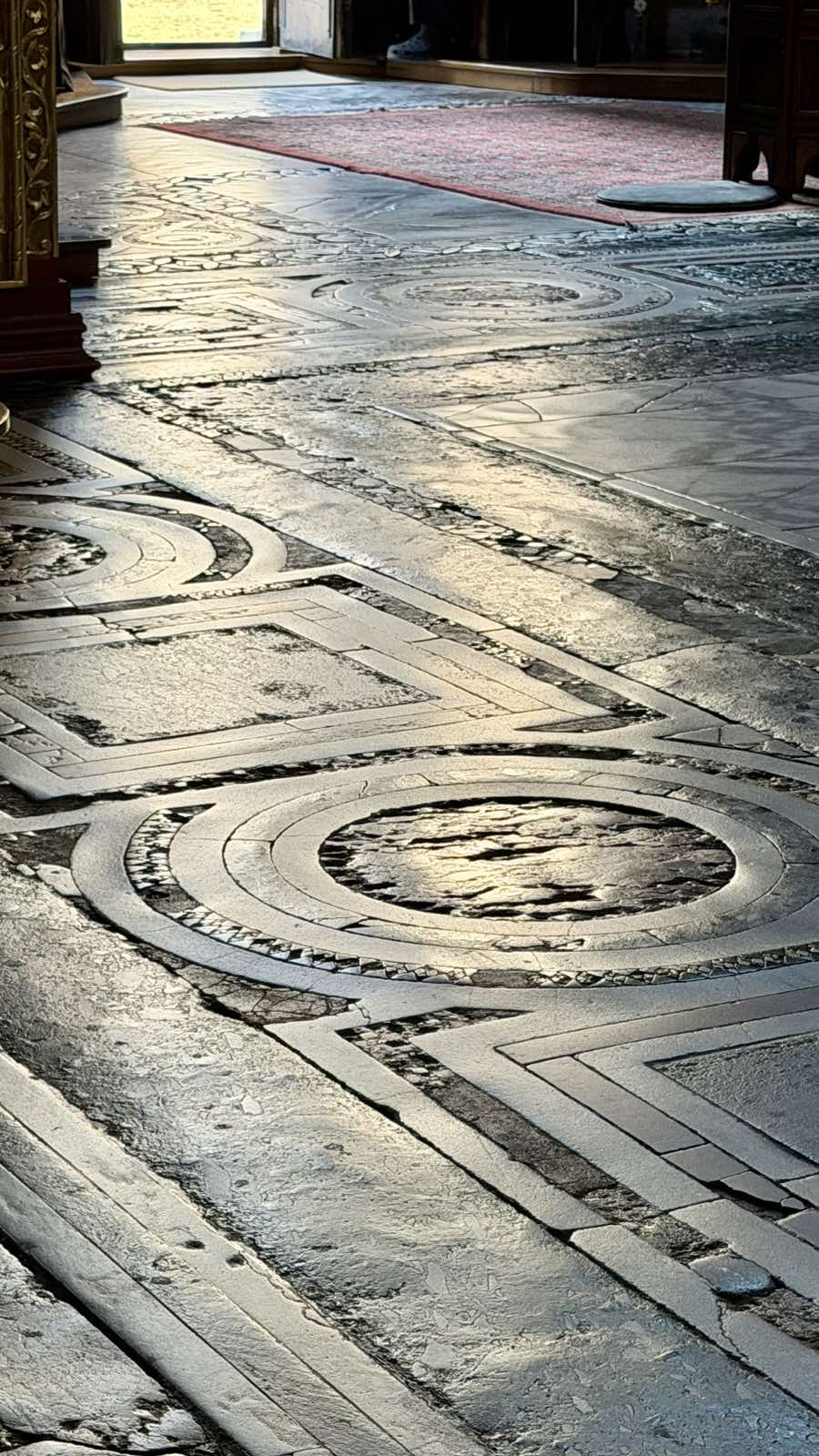
And yet, in the end, the Holy Mountain does not give the pilgrim something that can simply be carried away and possessed. Rather, it quietly takes something from us: our haste, our self-assurance, our need to explain everything. There, among ancient stone walls, amid the fragrance of incense, in the long silence of the night, and before the faces of monks who have learned to wait, one begins to understand that what is truly ancient is always new.
The Holy Mountain does not speak loudly. It simply remains—praying, receiving, and giving. And in that hidden giving, the heart discovers that the Church is not the memory of something that has passed, but a living presence.
We came as visitors; slowly, almost without noticing, we came to understand that we had been received as brothers. And perhaps this is the deepest gift of the Holy Mountain: that one does not depart with the feeling that he has merely seen something extraordinary and exceptional, but with the quiet assurance that even ordinary life can become holy when it is received with thanksgiving and offered to God.
This pilgrimage was far more than a journey to historic monasteries. It was an encounter with a living spiritual tradition—a reminder of the unity of the Orthodox Church, of the holiness of the monastic vocation, and of the profound spiritual heritage entrusted to us by our holy fathers.
On September 16, His Grace Bishop Maxim also participated in the one-year memorial service for the repose of the ever-memorable Archmandrite Vasilios Gontikakis, a renowned elder, spiritual father, and prolific author of numerous books on Orthodox spirituality. The memorial gathering was a deeply prayerful occasion, honoring the life and legacy of this distinguished servant of God.
From the Holy Mountain, we return with hearts filled with gratitude to God, strengthened by the prayers and spiritual counsel we received, and with a renewed desire to bring the blessings of the Holy Mountain into the life of our parish and our families.
May the prayers of the Most Holy Theotokos, Saint Sava, Saint Simeon the Myrrh-streaming, and all the saints of the Holy Mountain be with us all!